
Subway Jobs: Pay, Hours, Application and What the Work Is Like
Subway is one of the largest employers of teenagers and first-time workers in the country, simply because there are so many stores and turnover is constant. Every one of those stores is independently owned, though, so pay, hours and how you get hired vary far more than at a corporate-run chain. Here's what to actually expect.
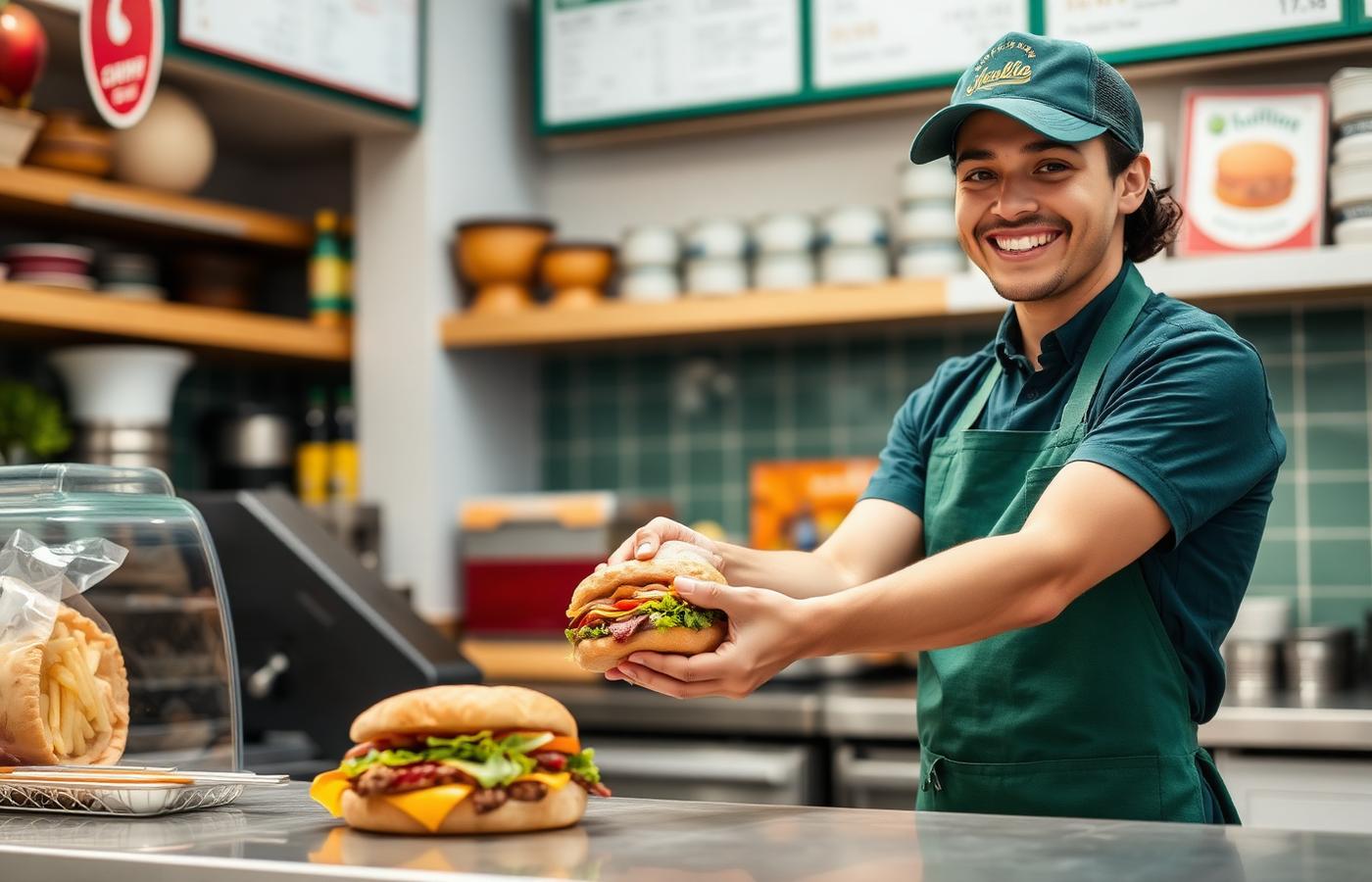
Roles at a Subway store
Most Subway locations run with a small, flat staff structure. A Sandwich Artist — the front-line crew title Subway uses for anyone making food or working the register — is the entry point for almost everyone. Above that sits a shift lead, who opens or closes and handles cash drops and scheduling questions when the manager isn't there. Above that is an assistant manager and then a store manager, who typically handles ordering, staffing, inventory and labor cost for the location. Larger franchise groups also employ area or multi-unit supervisors who oversee several stores at once, plus a small back-office team for payroll and purchasing.
Because each store is a small business, job titles and responsibilities shift slightly from owner to owner. A shift lead at one franchise group might be called a "certified trainer" at another and paid a small premium for training new hires on the current menu and pricing.
Pay ranges by role
Subway does not publish a national pay scale, because franchisees set wages individually within state and local law. The ranges below reflect what's typically advertised in 2026 job listings; treat them as a starting point and check the specific posting or ask in person, since a Subway in a high-cost city can pay several dollars more per hour than one in a small town.
| Role | Typical pay | Notes |
|---|---|---|
| Sandwich Artist (crew) | $11-$16/hr | Varies with state and city minimum wage |
| Shift lead / trainer | $13-$18/hr | Small premium over crew pay |
| Assistant manager | $14-$19/hr or salaried | Some locations move this role to salary |
| Store manager | $38,000-$55,000/yr | Higher in busy, high-volume locations |
| Multi-unit supervisor | $50,000-$75,000/yr | Oversees several franchised stores |
Pay varies store by store — always verify
Because every Subway is independently franchised, two locations a few miles apart can pay noticeably different hourly rates. Treat any figure you read online, including this one, as a general range and confirm the real number on the job listing or in the interview before you commit to a schedule.
Hiring age and requirements
Sixteen is the most common minimum hiring age across Subway franchises, largely because that's the age most states allow unrestricted daytime and evening retail hours. Some locations hire from 14 or 15 with a work permit and restricted hours, especially for daytime weekend shifts, while others set the bar at 18 if the role involves closing alone or handling the safe. There is no chain-wide food-handler certification requirement in most states, though a few jurisdictions require a food handler card that the store will usually help you obtain after you're hired.
Reliable availability matters more than experience for most crew hires. Being able to work weekends, school holidays or the lunch rush is often the deciding factor between two otherwise similar candidates.
How to apply and interview
Applications go through the careers section of subway.com, third-party job boards, or simply by asking in-store, which still works surprisingly often for crew roles. Because hiring decisions sit with the local franchisee rather than corporate, response times vary — some stores call back within a day, others take a couple of weeks depending on how urgently they need to staff a shift.
The interview itself is usually short and practical: availability, why you want the job, how you'd handle a rush or a difficult customer, and sometimes a quick walk-through of basic food safety like handwashing and cross-contamination. Dress reasonably neat, show up on time, and be specific about which days and hours you can actually work — vague availability is the single most common reason candidates don't get called back.
What a shift is actually like
A typical shift centers on building sandwiches to order along the line, working the register, keeping the prep station stocked, and cleaning as you go. Lunch and dinner rushes are genuinely fast-paced, especially at stores near offices or schools, while mid-afternoon shifts are slower and often used for prep, restocking bread and vegetables, and light cleaning. Staff need to know the current lineup — including Series menu items, bread options and sauce choices — well enough to keep the line moving during a rush without slowing down regulars who know exactly what they want.
Most locations also run delivery and mobile order fulfillment now, so part of many shifts involves bagging and staging orders placed through online ordering and delivery apps alongside walk-in customers, which adds a layer of multitasking that didn't exist a decade ago.
Career growth and moving up
Because turnover at the crew level is high across quick-service restaurants generally, reliable Sandwich Artists who show up on time and learn the line quickly tend to get noticed fast. A common path is crew to shift lead within two to six months, shift lead to assistant manager within a year, and assistant manager to store manager within one to two years for someone who wants it. Multi-unit franchisees — owners who run five, ten or more locations — often promote from within specifically because training an outside hire from scratch is more expensive than developing someone who already knows the systems.
Some long-term employees eventually move into franchise ownership themselves, though that's a much larger financial step covered in our Subway franchise cost breakdown.
Pros and cons of the job
On the upside: flexible scheduling that works around school, a genuinely fast promotion path relative to other entry-level jobs, and — at many locations — a free or discounted meal during shifts. The work is physical but not heavy, and the skills (multitasking, cash handling, customer service) transfer easily to other retail and food jobs.
On the downside: pay at the crew level is close to minimum wage at most stores, benefits are inconsistent because each store is independently owned, and rushes can be genuinely stressful when a store is short-staffed. Because franchise quality varies, it's worth asking current employees what a specific location is actually like before accepting an offer, rather than assuming every Subway operates the same way.
Frequently asked questions
How old do you have to be to work at Subway?
Most Subway franchisees hire from age 16, though some locations — particularly ones that keep a Sandwich Artist on the register alone during late shifts — set the minimum at 18. A few states allow 14- or 15-year-olds to work limited daytime hours with a work permit. Check the specific listing, since every Subway is independently owned and each owner sets their own policy within local labor law.
How much does Subway pay per hour?
Entry-level Sandwich Artist pay typically runs from the local minimum wage up to around $13-$16 an hour depending on state, city minimum-wage laws and how competitive the local labor market is. Shift leads and assistant managers usually land somewhere in the $14-$19 range, and store managers can reach $40,000-$55,000 a year at busier locations. Always check the current listing, since pay varies enormously store to store.
What does a Subway interview look like?
Expect a short, informal conversation with the franchisee or a manager rather than a multi-round corporate process. Typical questions cover availability, whether you can handle a fast-paced counter role, basic food-safety awareness, and how you'd deal with a difficult customer. Many locations do same-day or next-day interviews and can offer a start date within a week.
Does Subway offer benefits to part-time employees?
It depends entirely on the franchisee, since Subway corporate does not set employee benefits chain-wide. Some owners offer free or discounted meals during shifts, flexible scheduling around school, and a path to shift-lead pay bumps. Health insurance and paid time off are far less common at the crew level and are more likely once you move into a full-time assistant manager or manager role.
Can you move from Sandwich Artist to store manager?
Yes, and it's one of the more realistic fast-food career paths because so much of Subway's workforce is promoted internally. A typical progression is Sandwich Artist to shift lead within a few months, then assistant manager, then store manager, sometimes within one to two years for reliable, available staff. From there, some managers go on to run multiple units for a multi-unit franchisee.